




Pixton for Science: Make Scientific Thinking Visible
Students use multimodal writing to model scientific processes, explain phenomena, apply vocabulary, and show the reasoning behind what they know.
What’s Inside Pixton’s Interactive Science Lessons
Pixton has tools and ready-to-use resources for multimodal science writing, explanation, and assessment.
Science Lesson Ideas
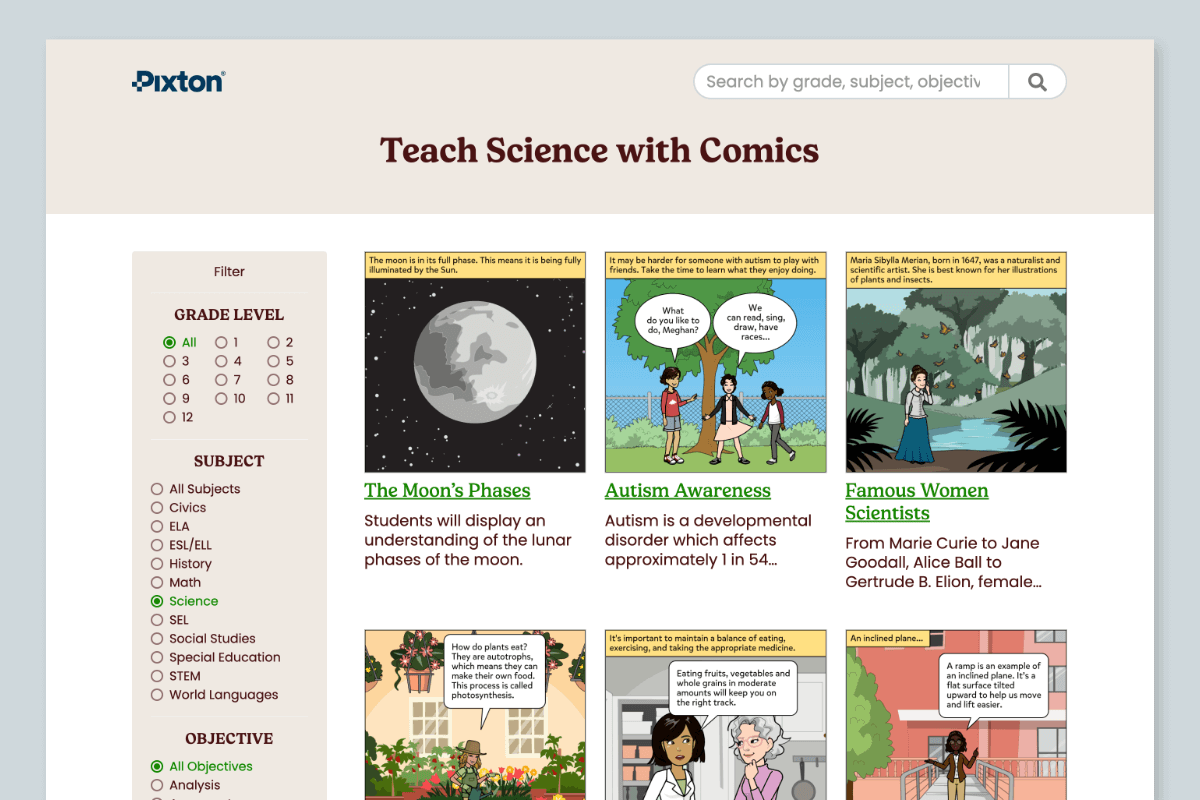
Save planning time with ready-to-use Pixton Lesson Ideas. Students can model processes, explain phenomena, sequence scientific events, apply vocabulary, and demonstrate understanding across topics such as ecosystems, forces and motion, cells, energy, weather, and more.
Featured Content and Story Starters
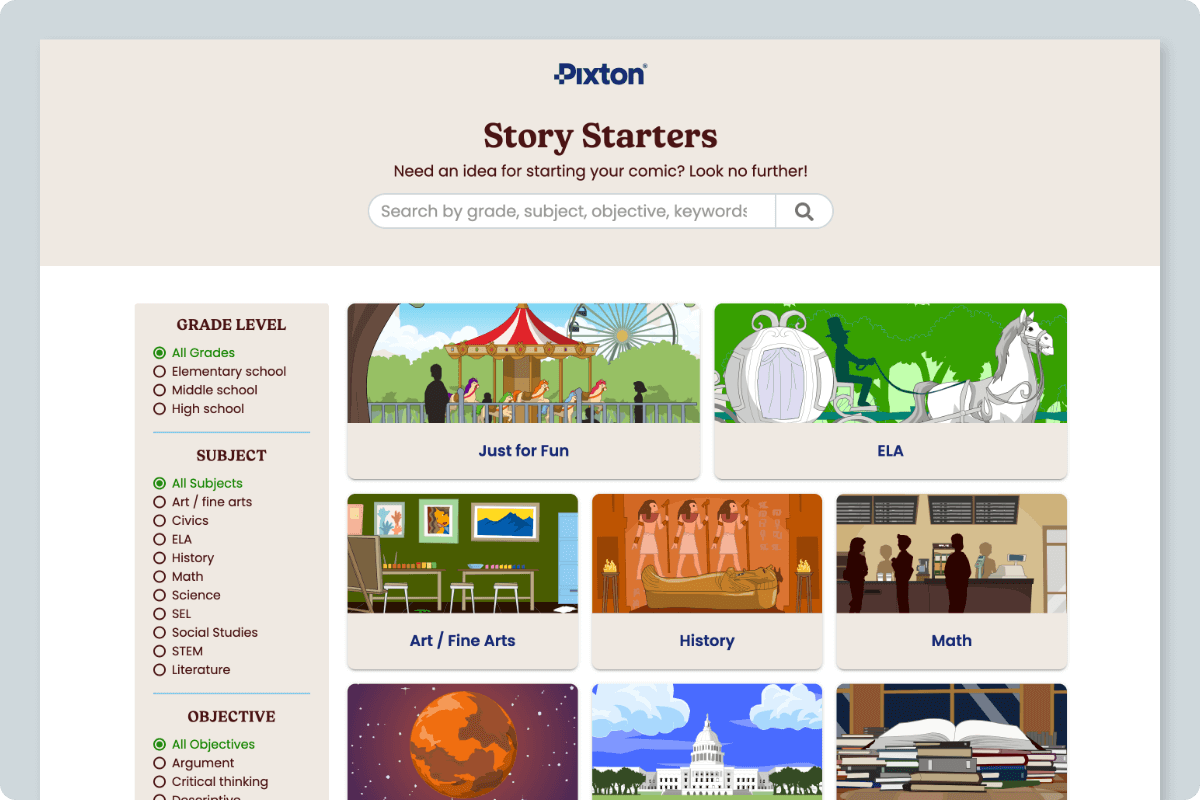
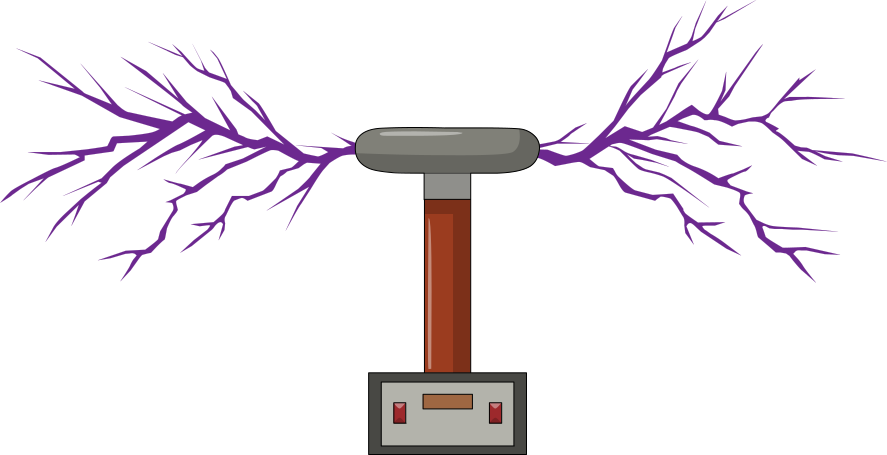
Pixton’s Featured Content gives students characters, settings, objects, and other visuals connected to science topics and concepts.
Story Starters provide another way to begin. Students might explain a scientific process, illustrate a lab procedure, model cause and effect, or respond to a question such as, “Why did this experiment produce that result?”
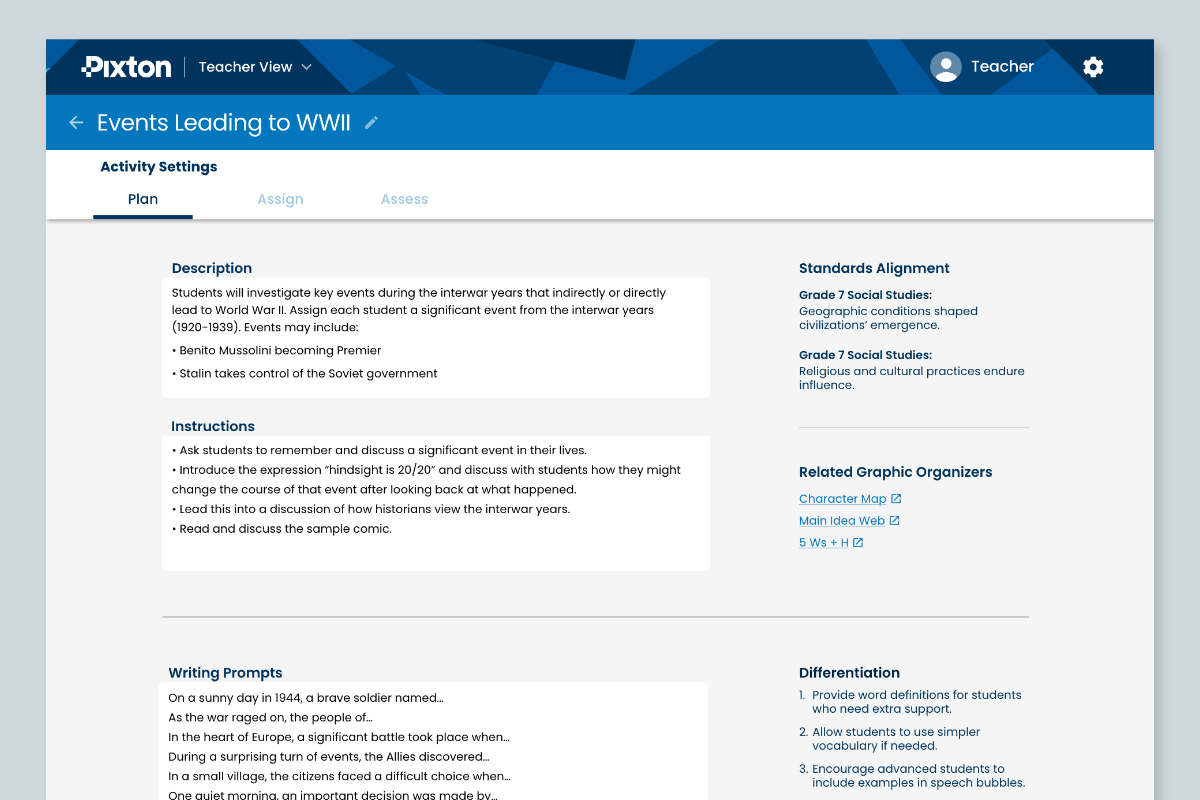
Activity Maker
Create a science writing or assessment activity in minutes with Pixton’s Activity Maker. Enter a scientific concept, skill, standard, or learning goal and generate an activity students can use to explain, model, sequence, compare, or demonstrate understanding.
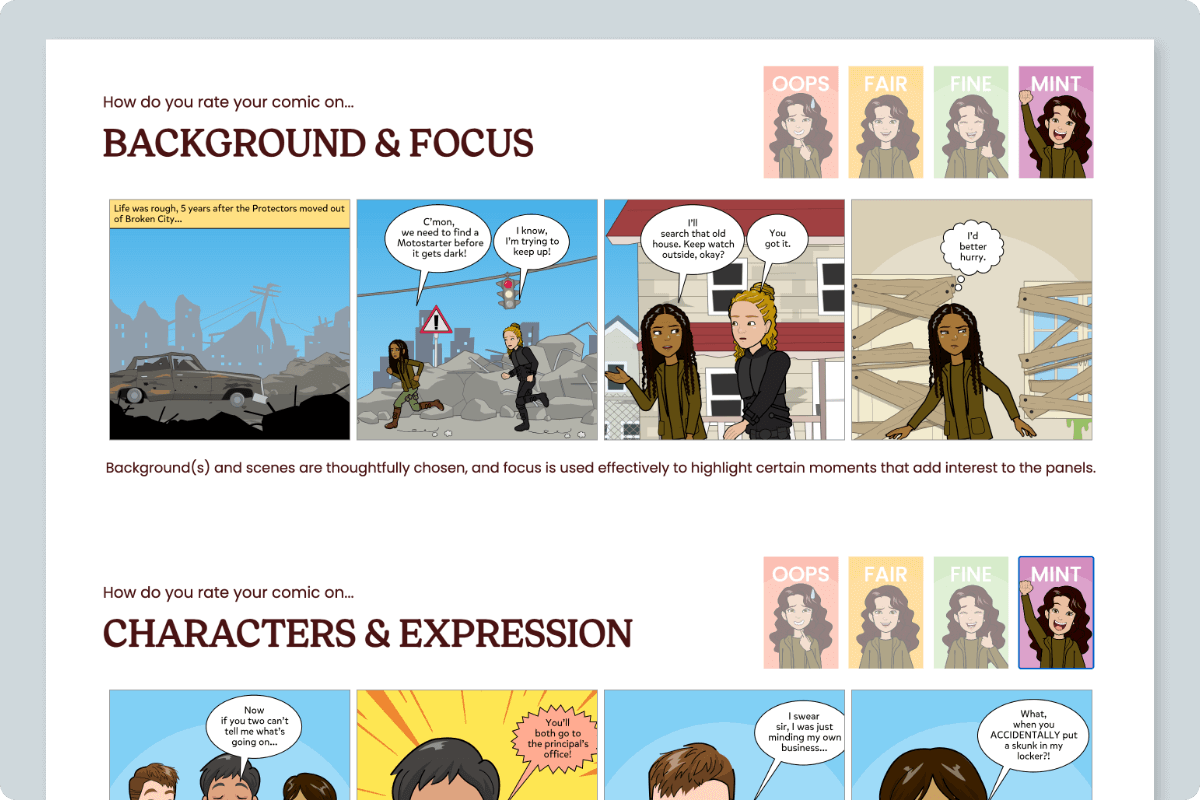
Interactive Rubric

Assess Multimodal Science Work
| The student decides | You can see |
| What order the panels go | Sequence, cause and effect, and understanding of a scientific process. Whether events happen in a logical and accurate order. |
| What the characters say | Scientific vocabulary in context, explanation, reasoning, and whether students can communicate concepts in their own words. |
| What appears in each panel | Important parts of a system, process, experiment, or phenomenon. Scientific accuracy, relationships, and relevant detail. Whether observations, data, examples, or scientific information support their explanation or claim. |
| How things change between panels | Cause and effect, changes over time, interactions between variables, and whether students understand what produced the change. |
| What they leave out | What they judged most important. Missing steps, relationships, or evidence can also reveal misconceptions or gaps in understanding. |
Why You’ll Love Teaching Science With Pixton
-

Students Want to Explain What They Know
Pixton gives students an approachable way to work through complex scientific ideas. Instead of starting with a blank page, they build explanations using scenes, characters, captions, dialogue, sequencing, and other visual choices. -

Built to Fit Your Science Curriculum
Pixton fits seamlessly into your science curriculum. Activities align with U.S. state and Canadian provincial science standards, supporting practices such as modeling, explaining phenomena, sequencing steps, and using evidence. The Activity Maker helps you create custom, curriculum-aligned lessons in minutes. -

Designed to Make Your Day Easier
Start with ready-to-use Lesson Ideas, Featured Content, Story Starters, rubrics, and the Activity Maker instead of building every science activity from scratch. Pixton can support one quick check for understanding or repeated multimodal writing throughout a science unit.
Why Pixton Works for Science


Students use words and visuals together to organize information, communicate meaning, and make their thinking visible, giving teachers another way to see and assess understanding.
Pixton is also backed by independent validation and research into multimodal learning, writing, comprehension, and student engagement. Pixton meets ESSA Tier 2 evidence standards and has earned Digital Promise certifications for Research-Based Design and Learner Variability.
Ready to Make Scientific Thinking Visible?
Help students model, explain, and communicate what they know with Pixton.